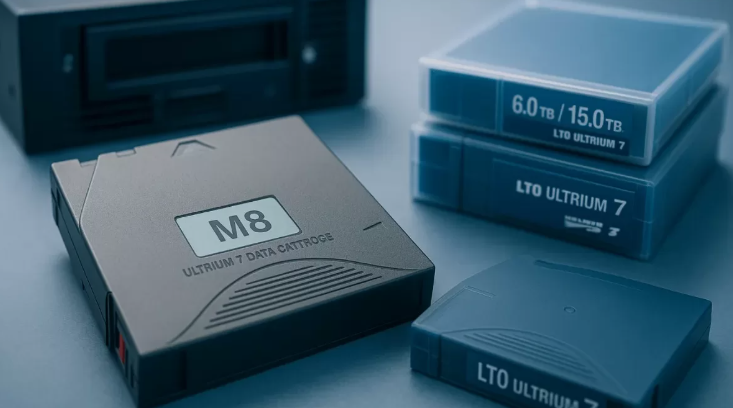
Used data tape media might sound outdated, but consider this: enterprise-grade tape drives start at around $3,000-$5,000 USD, while buying used tapes can cost you less than 2 cents per GB. That’s serious savings.
Data grows at 40-50% per year, and storage needs are skyrocketing. You need reliable backup solutions without breaking the bank.
This piece will walk you through everything about buying used data tape. What is a data tape? Why choose used over new? What should you check before purchasing Big Data Supply data tape?
We’ll cover the benefits of using data tape and the risks involved. You’ll learn what to look for to make smart buying decisions.
What Is Data Tape Media?
Data tape media stores digital information on magnetic tape using a system that’s been around since 1951, when the UNIVAC I first used it. You can picture it as a long strip of plastic film coated with magnetizable material, typically iron oxide or metal particles, wound onto spools inside protective cartridges.
Modern magnetic tape comes packaged in cartridges rather than the massive open reels you might picture from old computer rooms. The device reading or writes this data is called a tape drive. We use tape storage for system backup, data archive, and long-term storage because of its low cost per gigabyte.
Types of Data Tape Formats
LTO dominates the market and accounts for 91.18% of drive revenue and 83.58% of tape cartridge revenue. HP, IBM, and Quantum developed it as an open standard in the late 1990s. You’re not locked into one vendor’s proprietary system.
Several other formats exist beyond LTO. Enterprise environments commonly use IBM 3592 series tapes. DLT-S (Digital Linear Tape) has up to 800GB per unit but transfers data at only 60 MB/s. DAT (Digital Audio Tape) serves small businesses with 80-160GB capacity on DAT-160 and DAT-320 formats. Sony’s AIT (Advanced Intelligent Tape) has flash memory on cartridges for faster directory access and reaches 400GB capacity.
When buying used media, it helps to understand which formats work with your hardware, especially if you are comparing options for Big Data Supply data tape.
How Data Tape Storage Works
Magnetic tape has two layers: a flexible base film providing strength and a magnetic recording layer where data lives. The tape drive’s read/write heads magnetize particles in specific patterns representing binary information (ones and zeros).
Data is written from beginning to end sequentially, unlike hard drives that allow random access. The tape moves from one reel to another and passes the read/write head. Single-reel cartridges have a take-up reel inside the drive, while dual-reel cartridges contain both reels.
LTO Technology Standards
LTO-1 launched in 2000 with 100GB native capacity. Each generation roughly doubles capacity. LTO-5 reached 1.5TB in 2010. LTO-8 hit 12TB in 2017. LTO-9 offers 18TB native capacity. The latest LTO-10 defines cartridges holding 30TB or 40TB each.
Newer drives can read older tapes through backward compatibility. Drives could write back one generation and read back two generations up to LTO-7. LTO-8 and LTO-9 write and read back one generation. LTO-10 eliminated backward compatibility due to head redesign.
Key features are WORM (Write Once Read Many) for compliance, hardware encryption from LTO-4 onward, and LTFS (Linear Tape File System) from LTO-5, which lets you access tapes like regular storage devices.
Why Consider Buying Used Data Tape Media
Growing Data Storage Needs
Data volumes are exploding at 40-50% per year. We need more tapes. Your backup requirements double faster than budgets grow.
A used data tape gives you capacity without the premium price tag. Most users keep data on the same tape generation for 10 to 15 years before migrating. Previously owned cartridges still have plenty of life left because of that longevity.
Environmental Benefits
Tape produces up to 87% less CO2 over 10 years compared to HDDs storing similar data. The benefits of using data tape extend beyond your wallet. Tape consumes 87% less energy than disk arrays. Tapes draw nearly zero power at rest.
Manufacturing effect matters just as much. Plastic cases housing tape spools require nowhere near as many resources as the complex components in disk drives. A data center storing 100 petabytes could drop e-waste by 51% if it moved just 60% to tape.
Recycling used data tape often costs less than destruction, which runs $3.00 to $8.00 USD per tape. Some recyclers even pay you and create positive returns on surplus inventory.
What to Check Before Buying Used Data Tapes
Cartridge Load Count and Usage History
Modern tape drives track cartridge usage internally. An LTO tape sustains 200 to 364 full file passes depending on drive wear and handling. Higher counts mean more wear on magnetic components, so check if the seller provides load count data.
Some drives monitor usage and alert when replacement becomes necessary automatically. Ask about this history before you buy. Newer drives with firmware updates can display cartridge health margins and data verification status.
Storage Conditions and Shelf Life
Temperature and humidity matter more than you’d think. Magnetic tapes stored at standard room temperature (20-25°C) can remain playable for around 100 years. Temperatures above 74 degrees tighten tape packs and force debris into magnetic layers, creating permanent dropouts.
High humidity accelerates binder degradation and enables fungal growth. Industry standards recommend 65 degrees at 40% humidity. Polyester-based tapes in good condition show remarkable stability even after a year-long exposure to harsh conditions.
Compatibility with Your Tape Drive
LTO-9 drives read and write LTO-9 and LTO-8 cartridges but reject older generations. LTO-8 drives handle LTO-8, LTO-7, and M8 media. Each generation follows specific compatibility rules. LTO-7 drives read LTO-7, LTO-6, and LTO-5 (read-only).
Mismatched media triggers error codes. The drive returns sense key 3 with error code 30/01 for unsupported cartridges. Verify your drive model before buying Big Data Supply data tape.
Data Security and Previous Data Removal
Degaussing erases data using magnetic fields stronger than write heads. Certified methods like Phoenix Certified prevent sophisticated recovery techniques. Standard overwriting leaves residual magnetization.
Warning: never degauss media with factory servo patterns. You’ll render it unusable.
Physical Condition and Damage Signs
Look for cracks, chips, or missing screws on cartridges. Shake them gently and listen for rattles. Check that spring-loaded hubs center properly and that reel locks function. Open the door and examine the leader pins and tape condition.
Seller Reputation and Return Policy
Returns need authorization within 30 days, typically. Non-defective returns incur 15% restocking fees. No refunds, only exchanges for defects. Check seller feedback ratings before purchasing used cassettes or cartridges.
Risks of Using Used Data Tape Media
Data Integrity and Read Errors
Magnetic decay happens over time. Error rates climb, and retrieval slows as tapes age. Binder hydrolysis breaks down the polymer holding magnetic particles to the base film. Squealing sounds during playback or jerky tape movement signal this degradation.
Degraded tapes can strip the magnetic coating right off the base during playback. Data recovery becomes expensive and laborious.
See also: How Digital Technology Transforms Storytelling
Hidden Wear on Magnetic Components
Binder deterioration isn’t always visible. Sticky shed syndrome results from polyurethane binders absorbing moisture through hydrolysis. Tapes from the early 1970s through the early 1980s face the highest risk. Storage humidity accelerates the breakdown.
“Baking” treatments restore playback, but the fix lasts only weeks before tapes become unplayable again.
Warranty and Support Limitations
Manufacturer warranties cover defects, not data loss. Quantum replaces faulty cartridges but disclaims liability for lost data. You’re on your own if the used data tape fails during critical backups.
Potential Security Vulnerabilities
Tape data erasure isn’t foolproof. Imation purchased 100 recertified tapes and found sensitive information from major U.S. banks, hospitals, and research centers. Even 99.9% erasure leaves hundreds of megabytes recoverable. Shredding produces tape fragments over 130mm long containing gigabytes of data.
Conclusion
You now have everything needed to make smart decisions at the time of buying Big Data Supply data tape.
Compatibility should be your first check, and you must get into the physical condition. Verify usage history as well. Buy from reputable sellers with clear return policies. That’s the most important part.
Used tapes deliver incredible cost savings, but only if you do your homework. Weigh the benefits against the risks. Small purchases will help you test reliability at first. Your storage budget will thank you.